Ketcher — Molecule Sketcher
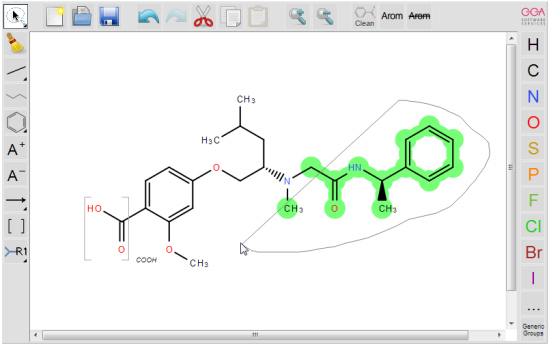
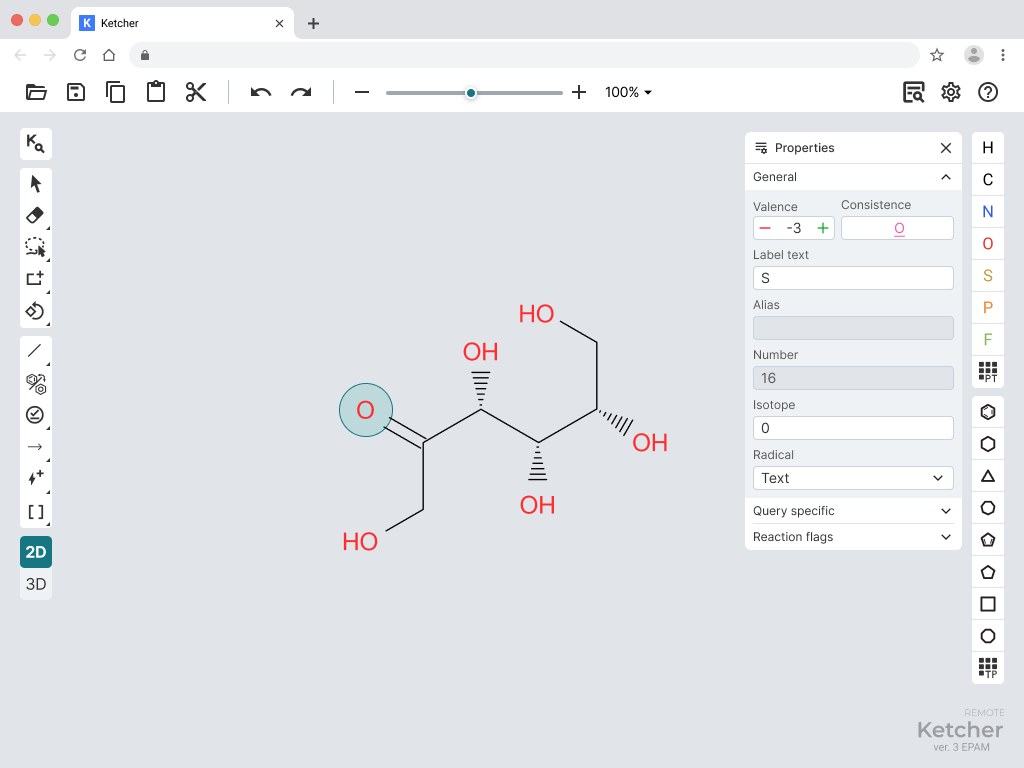
Ketcher is an open-source chemical structure editor used by researchers and pharmaceutical companies. Scientists draw formulas from scratch, load them from files or import them from pictures. The tool was used in drug R&D — including a COVID-19 treatment project.


Problem
The tool had grown organically over time and lacked a clear UX structure:
- Complex interface with non-intuitive controls
- Poor discoverability of key functions
- No clear documentation or onboarding
- Inconsistent experience across browsers and devices
Goal
- Make it easier for scientists to draw, edit and export chemical structures
- Improve navigation and reduce usage errors
- Ensure compatibility across modern browsers
- Retain scientific precision while improving accessibility
What I Did as UX Researcher
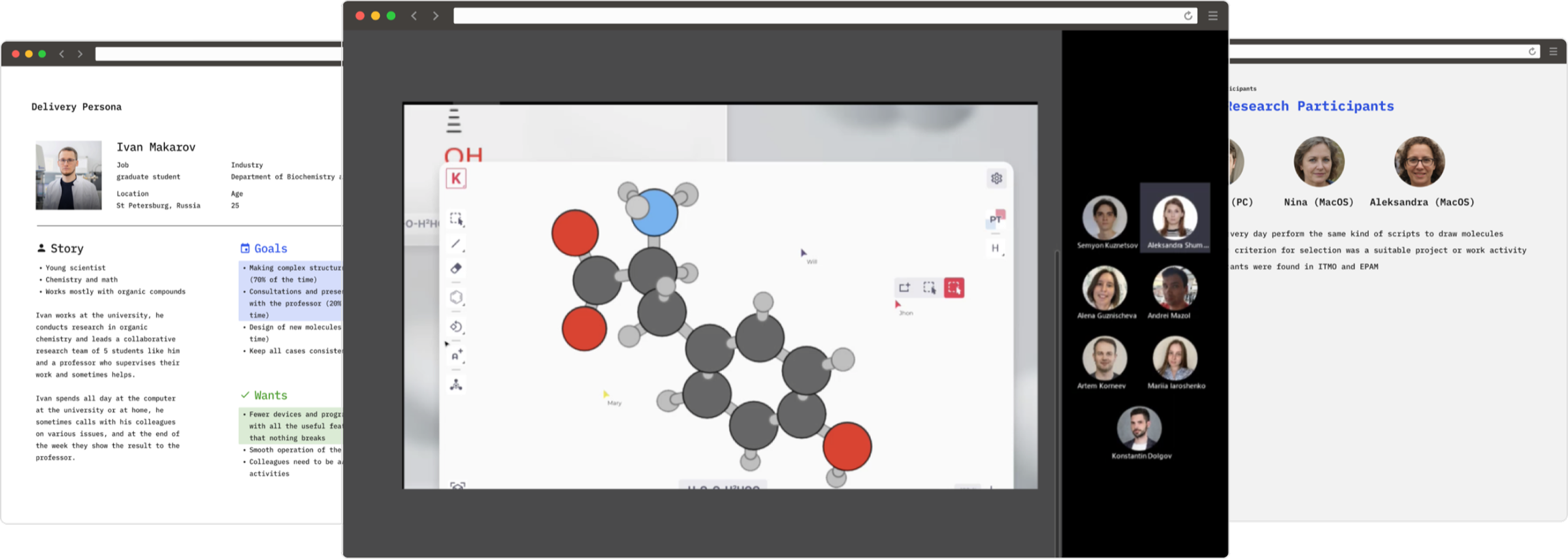
- Conducted interviews with internal chemists and external open-source users
- Researched key barriers, pain points and user needs
- Explored pain points through recorded screen sessions and GitHub issue history
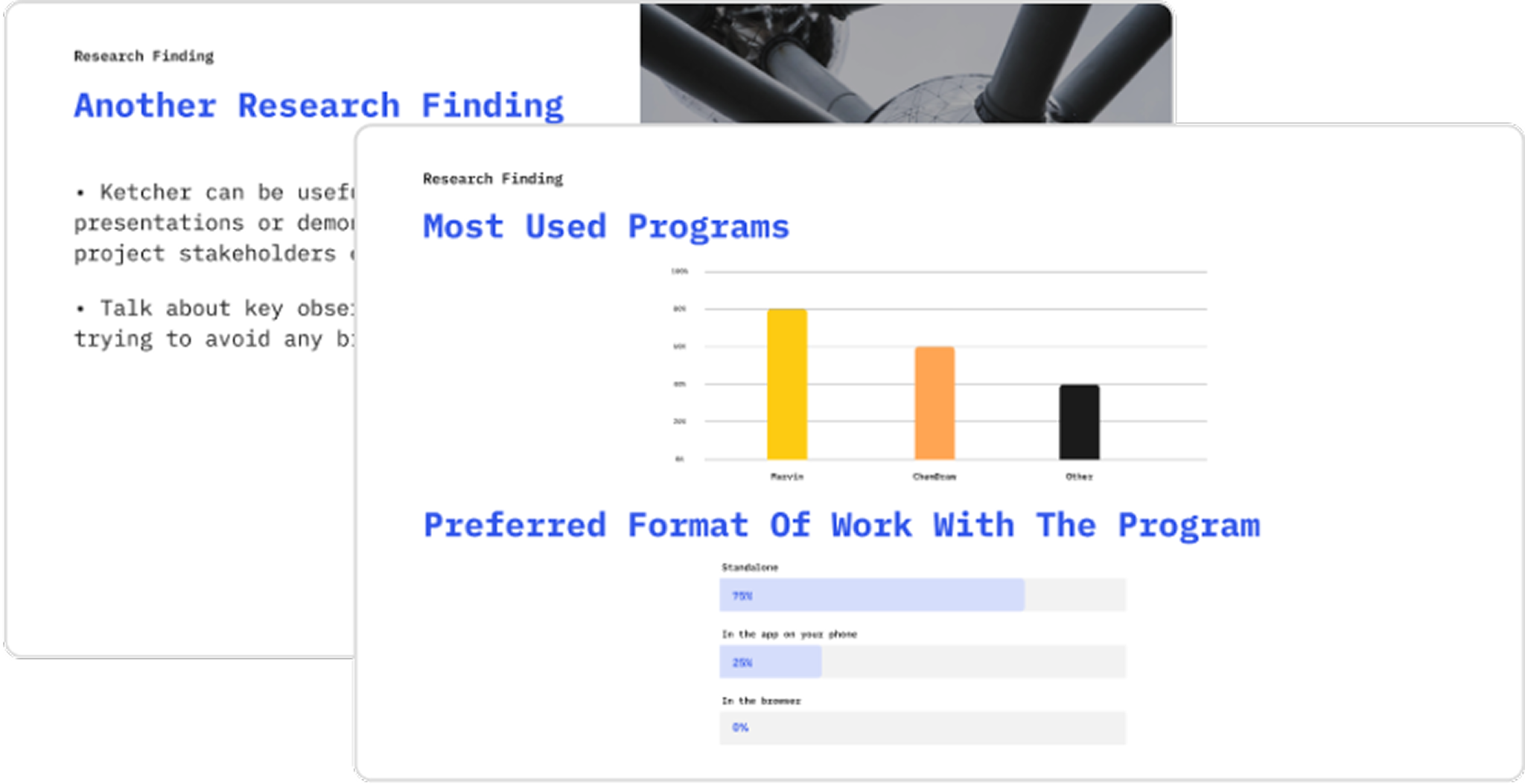
- Ran competitive analysis of structure editors: Marvin, ChemDraw, BKChem
- Focused on task flows for creating molecules, editing bonds and exporting data
As a UI designer, I also supported the design team with the UI kit and presentation design.
Key insight: most users only use 10–20% of the available tools — but can't find them quickly.
Achievements
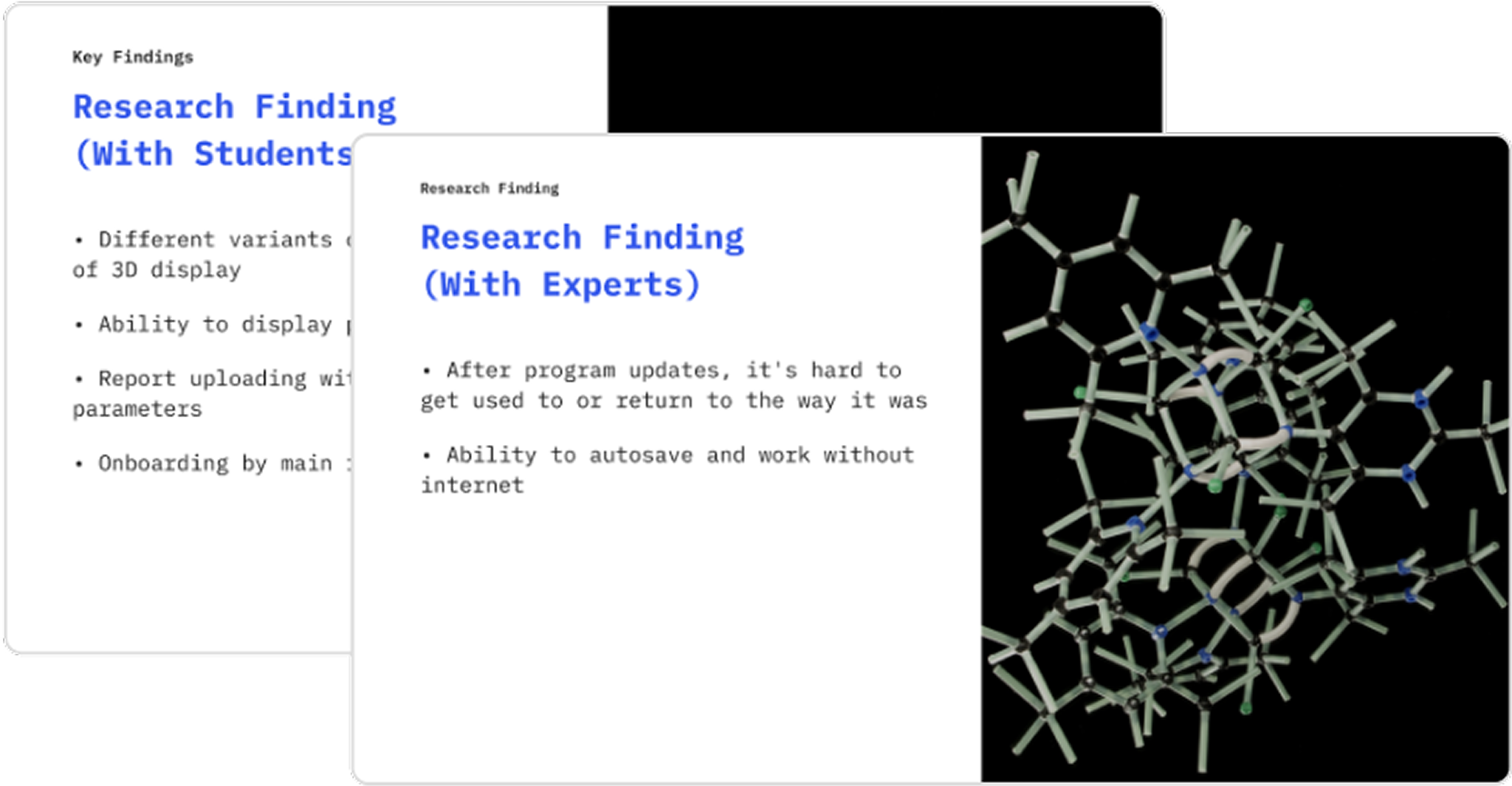
While interviewing students, professors and scientists, we discovered the COVID Moonshot project — an open-science effort that used Ketcher to develop a COVID-19 treatment, aiming for a cost-effective, unpatented formula any pharmaceutical company could produce globally. Our team's redesign directly supported this work.
Results
- Cut task time (e.g. drawing and exporting) by ~30% in internal testing
- Positive feedback from contributors: “This makes onboarding so much easier”
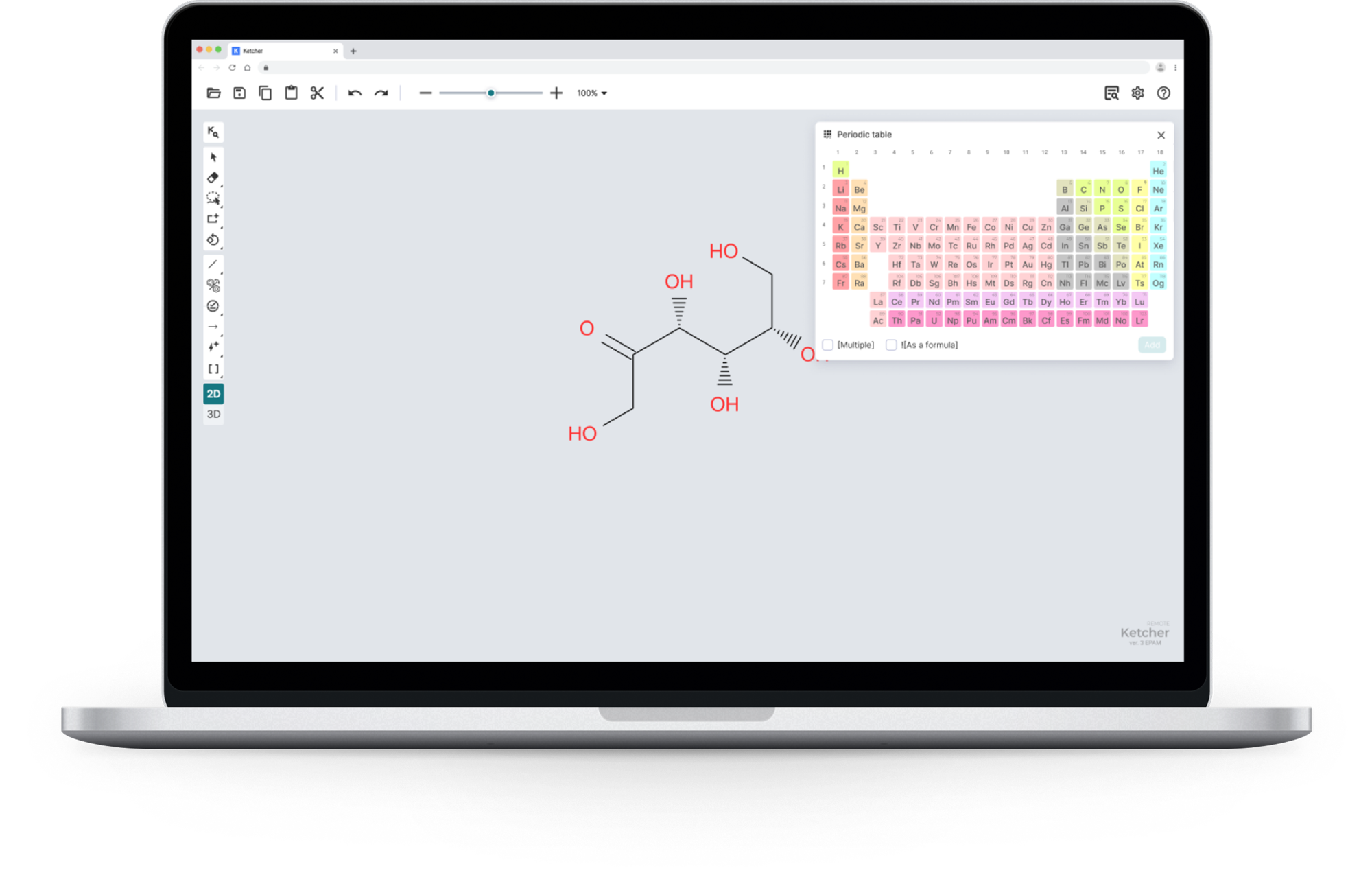
- The new UI is now featured as the default demo in EPAM Life Sciences Open Source — EPAM presents it to prospective clients as a showcase of what the team can deliver